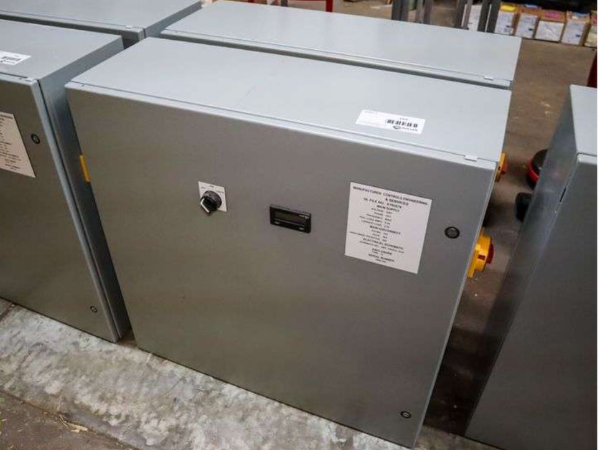
Control Panels
A Control Panel is a critical component in power plant operations, serving as the central hub for monitoring, controlling, and managing various systems and equipment. Designed for real-time supervision and automated control, control panels ensure safe, efficient, and reliable operation of power generation and auxiliary systems.
Control panels integrate a wide range of electrical and electronic components such as PLCs (Programmable Logic Controllers), relays, circuit breakers, HMI (Human-Machine Interface) screens, sensors, and communication interfaces. They are used to regulate boilers, turbines, generators, transformers, pumps, and other essential systems across fossil fuel, nuclear, and renewable power plants.
Key Features:
-
Real-time system monitoring and control
-
Centralized interface for process automation and alarms
-
High-performance PLC or DCS integration
-
Fault diagnostics and data logging for predictive maintenance
-
Customizable layouts for specific plant operations
-
Built to meet IEC, IEEE, NEC, and other international standards
-
Rugged enclosures for harsh environments (NEMA/IP rated)
Applications:
-
Generator control and synchronization
-
Boiler and turbine control systems
-
Auxiliary equipment control (fans, pumps, cooling systems)
-
Emergency shutdown systems
-
SCADA system integration for remote access and data collection
Control panels are essential for optimizing operational performance, minimizing downtime, and ensuring regulatory compliance. Their role in enhancing plant safety and efficiency makes them a cornerstone of modern power plant infrastructure.